The 2027 Strategic Shift
TL;DR: The Core 2027 Takeaways
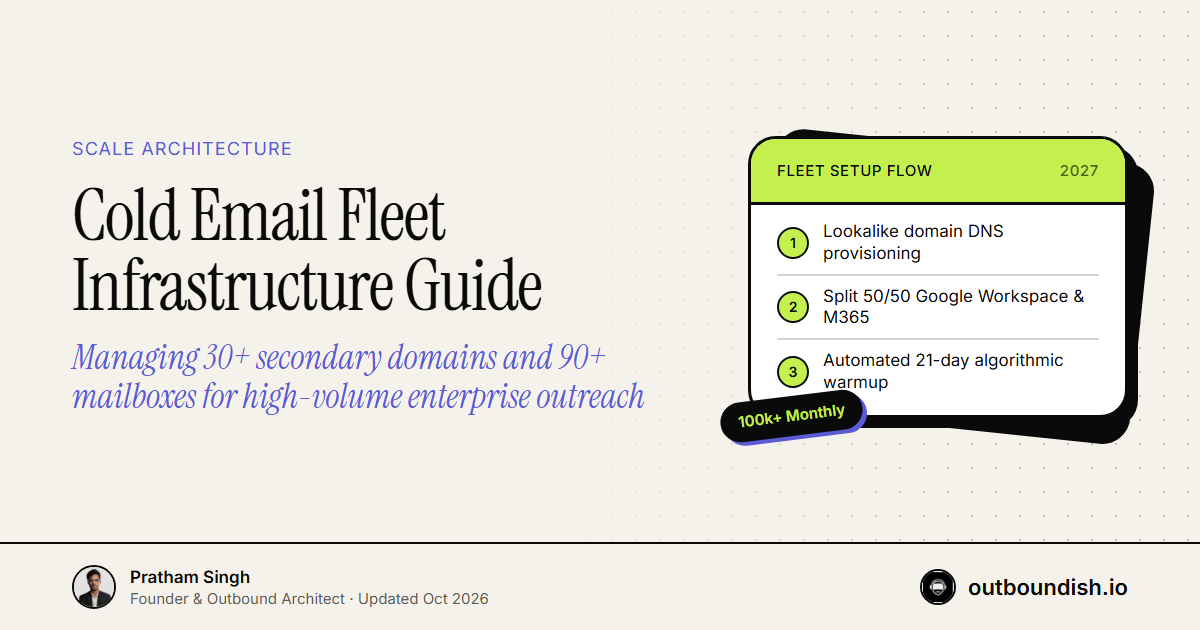
- Portfolio Decentralization: High-volume cold email (50k–100k+ sends monthly) requires spreading send volume across 20–30 secondary lookalike domains with 2–3 inboxes per domain.
- ESP Diversification: Avoid single-provider exposure by provisioning 50% of mailboxes on Google Workspace and 50% on Microsoft 365, rotating across both in Smartlead.
- DNS Alignment Protocol: Every secondary domain must feature hard SPF strings, 2048-bit DKIM keys, DMARC `p=reject` or `p=none` policies, and isolated custom tracking CNAMEs.
Entering 2027, the traditional outbound playbook has broken down. Inboxes are guarded by automated machine learning spam filters, buyer skepticism has reached an all-time high, and static database scraping yields diminishing reply rates. B2B revenue teams can no longer afford uncalibrated bulk outreach.
Modern demand generation is defined by high-precision targeting, rigorous deliverability hygiene, and transparent unit economics. Whether scaling outbound for an enterprise B2B SaaS startup or high-ticket service agency, the architecture below details how high-performing teams consistently capture executive attention without burning domain reputation.
Unit Economics: In-House SDR vs. Dedicated Outbound Infrastructure
Before launching sequences or configuring software tooling, leadership must evaluate the true fully loaded economics of outbound pipeline creation. The financial difference between building an internal SDR pod and deploying specialized agency infrastructure is substantial:
| Cost Driver | In-House SDR Hire | Outboundish Dedicated Agency Pod |
|---|---|---|
| Fully Loaded Annual Cost | $142,000 – $186,000 (Base + OTE + Taxes) | $15,600 – $44,400 (All-inclusive Retainer) |
| Software & Infrastructure Stack | $1,800/mo ($21,600/yr for Clay, Nav, Mailboxes) | $0 (Included in retainer fee) |
| Ramp Time to First Meeting | 90–120 Days (Zero pipeline during onboarding) | 14–21 Days (Pre-warmed domain infrastructure) |
| Target Meeting Output | Unpredictable (8–10 meetings if top quartile) | 8–12 standard (up to 20–21 enterprise) held calls/mo |
| Asset & Data Ownership | Internal tools, high SDR turnover risk | 100% client-owned secondary domains, inboxes & Clay data |
Technical Blueprint & Tactical Execution
Achieving predictable pipeline in 2027 requires executing three fundamental phases in exact sequence:
1. Secondary Domain Fleet Isolation
Never send cold outreach from your primary root domain. Procure 3–5 lookalike secondary domains (e.g., usecompany.com or getcompany.io). Each domain must feature full cryptographic authentication:
- SPF (Sender Policy Framework): Strict single-string authorization.
- DKIM (DomainKeys Identified Mail): 2048-bit cryptographic key alignment.
- DMARC (Domain-based Message Authentication): Configured with
p=rejector monitoredp=nonewith rua reporting. - Custom Tracking CNAME: Isolated tracking subdomain to prevent sequencer domain pollution.
2. Signal-Based Targeting & Waterfall Enrichment
Instead of relying on a single stagnant database, orchestrate multi-vendor waterfall enrichment in Clay. When target accounts trigger buying signals (new VP hire within 90 days, engineering expansion, or competitor tech churn), the workflow queries multiple data vendors sequentially:
// 2027 Programmatic Outbound Waterfall Flow
1. Ingest Account Signal -> LinkedIn Sales Navigator Live Filter
2. Query Provider A (Prospeo) -> If Match: Verify SMTP
3. Else Query Provider B (Datagma) -> If Match: Verify SMTP
4. Else Query Provider C (Dropcontact) -> If Match: Verify SMTP
5. Catch-All Scrub -> MillionVerifier -> Push to Sending Fleet
3. High-Context Conversational Outreach
Eliminate corporate generic introductions. High-converting 2027 sequences utilize short (under 100 words), human-sounding copy focused on a single business friction point paired with a low-friction, permission-based call-to-action:
"Noticed your team recently brought on 4 new account executives—usually means pipeline generation is top of mind this quarter. We recently helped a peer team generate 18 held discovery calls in 30 days without burning corporate domains. Worth a brief look at the breakdown?"
Ready to deploy a predictable outbound engine? Discover how our B2B lead generation agency and dedicated cold email agency deliver qualified pipeline under our transparent unit pricing model ($1,100–$2,300 pilot, $1,300–$3,700/mo retainer).
DNS Authentication Standard: Review technical SPF record formatting under the IETF RFC 7208 Sender Policy Framework.
People Also Ask
At 30 emails per mailbox daily across 22 sending days (660 emails/month/mailbox), sending 50,000 emails requires approximately 75 mailboxes across 25 secondary domains.
Google mailboxes achieve superior deliverability to Gmail recipients, while Microsoft mailboxes excel when reaching Outlook/Exchange enterprise buyers. Diversification mitigates provider risk.
A custom tracking domain wraps email links and tracking pixels in your own sub-domain (e.g., track.getcompany.com) rather than shared sequencer domains, boosting inbox placement.
The client owns 100% of all secondary domains, Google Workspace/M365 tenancies, and enriched Clay data upon program completion with zero vendor lock-in.