The 2027 Strategic Shift
TL;DR: The Core 2027 Takeaways
- The Multi-Inbox Imperative: In 2027, sending all cold emails through a single domain or mailbox triggers instant spam classification. High-performing teams distribute volume across 20+ secondary inboxes using Smartlead or Instantly.
- Warmup Pool Ecosystems: Warmup networks must feature human-like reply behaviors and spam folder rescue algorithms to protect domain reputation prior to campaign launches.
- API & Webhook Architecture: Modern outreach demands native integration with Clay for waterfall data verification and Cal.com for friction-free meeting bookings.
The 2027 Cold Email Software Landscape
Entering 2027, the criteria for selecting cold email software have fundamentally shifted. In past years, sales teams focused primarily on user interface design and basic email sequencing templates. Today, major mailbox providers like Google and Microsoft leverage machine learning algorithms that detect uniform sending cadence, unverified SMTP headers, and repetitive message bodies.
To generate predictable B2B sales pipeline, modern revenue teams require specialized cold email infrastructure designed for multi-inbox distribution, automated warmup health, and deep API connectivity. Below is an objective analysis of the leading tools powering high-conversion outbound engines in 2027.
Core Evaluation Criteria for Cold Email Tools
Before purchasing subscriptions, evaluate platforms against five critical technical pillars:
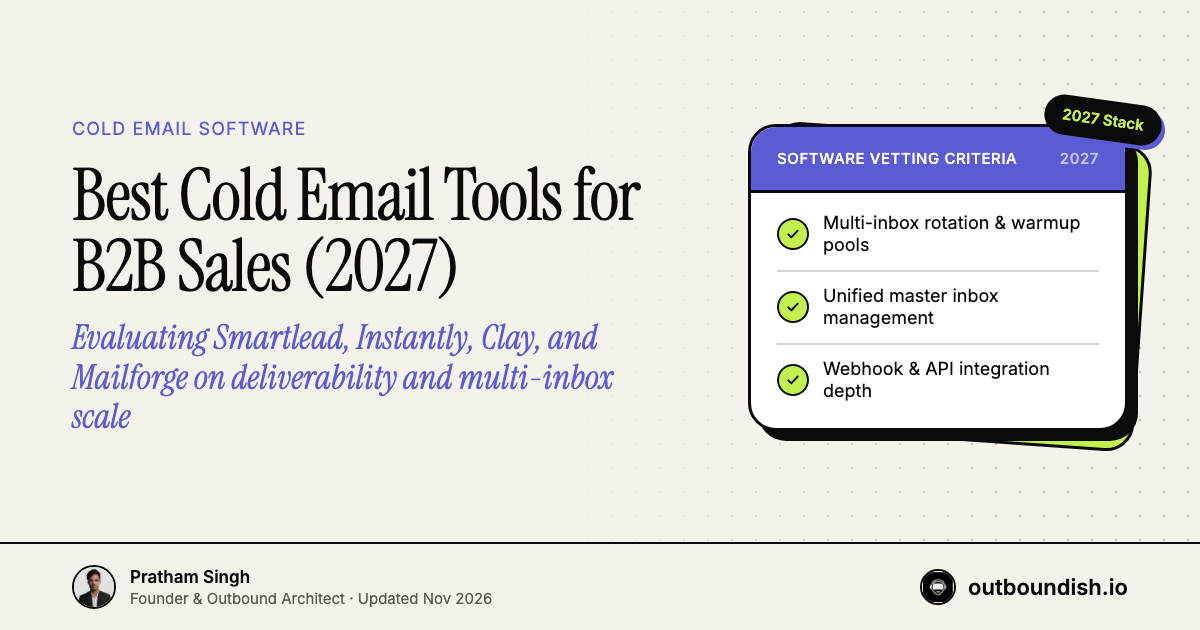
- Multi-Inbox Account Rotation: The ability to connect dozens of sender accounts and distribute a single campaign seamlessly across all inboxes to keep daily volume per address low.
- Algorithmic Warmup Networks: Dynamic peer-to-peer warmup pools that simulate organic conversation, mark messages as important, and rescue emails from junk folders.
- Centralized Master Inbox: A unified interface to triage, label, and respond to interested leads across all connected secondary domains without logging into individual mailboxes.
- Deliverability Diagnostics: Real-time placement tests tracking SPF, DKIM, DMARC, and MX record alignment to flag burned accounts before campaigns launch.
- Webhook & CRM Ecosystem: Native webhooks that push positive replies into Clay or your CRM (HubSpot, Salesforce) and route qualified prospects to calendar links.
Top 4 Cold Email Software Platforms Compared
| Platform | Best Use Case | Inbox Rotation | API / Webhook Depth | Starting Price |
|---|---|---|---|---|
| Smartlead | High-Volume Agencies & Enterprise Scale | Unlimited Inboxes | Enterprise REST API & Webhooks | $39 / mo |
| Instantly | SMBs, Founders & Early-Stage Teams | Unlimited Inboxes | Standard Webhooks & API | $37 / mo |
| Clay | Waterfall Enrichment & Custom Logic | Native Send / Webhook Push | Advanced HTTP API Integrations | $149 / mo |
| Mailforge | Automated Mailbox & Domain Provisioning | Dedicated Infrastructure | Direct Sequencer Sync | $3 / inbox |
1. Smartlead: The Industry Standard for Scaling Teams
Smartlead remains the premier choice for outbound agencies and mature revenue operations. Its standout architectural advantage is how it handles inbox rotation: instead of assigning leads to a single mailbox, Smartlead dynamically spreads sends across your entire fleet of warmed accounts, guaranteeing that no single address exceeds safe daily volume thresholds.
Furthermore, Smartlead’s Unibox aggregates inbound replies from hundreds of connected domains into one clean dashboard. SDRs and account managers can label leads, handle objections, and trigger booking sequences without juggling individual Google Workspace or Microsoft 365 logins.
2. Instantly: Streamlined Execution for Growth Startups
Instantly provides an intuitive, high-speed onboarding experience that makes it popular among early-stage founders and lean growth teams. Like Smartlead, it offers unlimited email account connections and an active peer-to-peer warmup pool.
While its API documentation is slightly less customizable than Smartlead's enterprise webhooks, Instantly excels at straightforward campaign setup, visual analytics dashboards, and built-in lead verification checks that warn you before emailing risky catch-all addresses.
3. Clay: The Data Intelligence Layer
While not a dedicated sending sequencer, Clay is the brain of modern outbound in 2027. Rather than uploading static CSV files directly into an email sequencer, elite sales teams build automated waterfall data workflows in Clay. Clay scrapes LinkedIn Sales Navigator, verifies email deliverability across multiple vendors (Prospeo, Datagma, Findymail), and generates contextual email icebreakers before pushing clean records into Smartlead.
Managing Tool Sprawl vs. Deploying Done-For-You Infrastructure
Assembling a modern outbound stack internally requires subscribing to multiple platforms: sending sequencers ($40–$100/mo), data scrapers ($150–$300/mo), secondary domains ($100–$200/yr), and inbox hosting ($180–$360/mo). Beyond software subscription costs, sales leaders must dedicate 15–20 hours per week to monitor domain health, swap burned accounts, and triage replies.
Discover how our specialized B2B lead generation agency and managed cold email agency provide fully managed outbound infrastructure under our transparent pricing model ($1,100–$2,300 pilot, $1,300–$3,700/mo retainer), delivering 8–12 standard to 20–21 enterprise qualified meetings every month.
Vendor Policy: Review commercial messaging rules and bulk sending constraints via the Google Workspace Acceptable Use Policy.
People Also Ask
Smartlead is widely regarded as the premier platform for agencies and high-volume teams due to its robust API, master inbox features, and unlimited mailbox rotation capabilities.
To safely send 1,000 cold emails daily, deploy 30 to 35 inboxes across 10 secondary domains, capping each individual inbox at 25 to 30 outbound sends per day.
While Apollo is excellent for initial database prospecting, using its native sequencer for high-volume outreach increases deliverability risks compared to dedicated infrastructure like Smartlead.
Outboundish builds and manages complete secondary domain fleets in Smartlead, delivering 8–12 standard to 20–21 enterprise qualified meetings monthly under our $1,300–$3,700/mo retainer.